Tourexpi

Turkish Airlines targets 20 percent capacity growth in Asia-Pacific
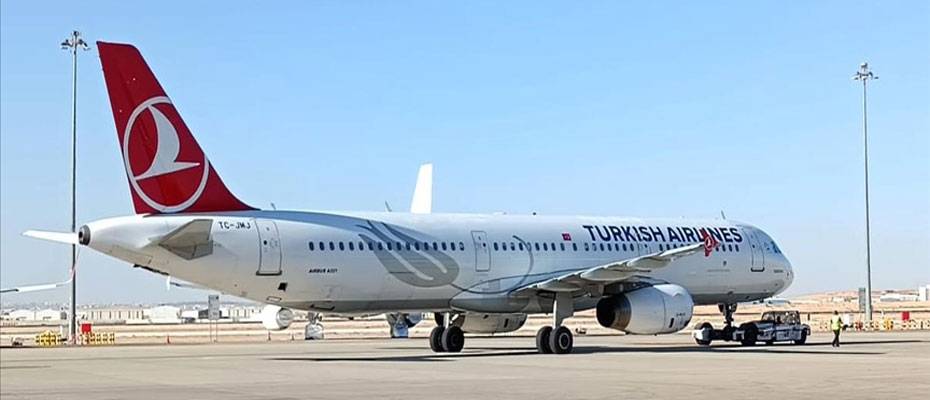
Turkish Airlines plans to increase its flight
frequencies in the Asia-Pacific region by up to 20 percent in the coming years,
further strengthening Istanbul’s role as a connecting hub between Asia,
Australia and Europe. The carrier intends to add second and third daily
services to selected destinations as demand shifts towards Asian markets.
The strategy has gained momentum following recent
tensions in the Middle East. Turkish Airlines redirected wide-body aircraft to
destinations including Japan, China, Australia, Thailand, Singapore and
Vietnam, adding 58 weekly passenger flights and 61 cargo services. Asia has
consequently become the airline’s largest region by revenue.
China expansion moves ahead of schedule
Turkish Airlines currently serves 358 destinations in
133 countries, according to Murat Seker, board chair of the airline. China is
one of the principal markets targeted for further expansion.
The carrier has added ten flights this year, bringing
its China schedule to 42 weekly services. Existing traffic rights would allow
this figure to rise to 49.
Frequencies to Beijing, Shanghai and Guangzhou have
already been increased earlier than originally planned. Turkish Airlines is
also preparing to launch Chengdu services in November, while Urumqi is another
planned destination.
The expansion forms part of a broader effort to
establish what Seker described in an interview with Nikkei Asia as an
alternative second corridor linking Asia and Australia with Europe.
Asia overtakes Europe in revenue share
The shift in capacity is already visible in Turkish
Airlines’ financial figures. Asian routes accounted for 32 percent of revenue,
an increase of five percentage points, putting the region ahead of Europe at 27
percent.
Asia’s share of total passenger traffic also increased
from ten to 12 percent. Connecting traffic between Africa and Asia jumped by 70
percent, while passenger flows between Eastern Europe and Asia rose by 40
percent, supported by shorter connections using Russian airspace.
Turkish Airlines also expanded its overall customer
base by around five percent with new passengers during the second quarter and
increased its market share by approximately one percentage point.
Second-quarter revenue reaches $7.2 billion
The additional Asian capacity contributed to a 20.5
percent year-on-year increase in second-quarter revenue to $7.2 billion.
Passenger revenue grew by 15 percent, while cargo revenue surged by 58 percent.
For the first half of 2026, total revenue increased by
20.8 percent to $13.1 billion.
The growth came despite higher costs associated with
tensions in the Middle East. Increased jet fuel prices added around $1.3
billion to expenses, while total conflict-related costs reached approximately
$2.1 billion.
Japan and Southeast Asia offer further growth
Japan is another focus of the expansion. Turkish
Airlines currently operates 25 weekly flights to the country and aims to
increase frequencies with the help of newly acquired traffic rights involving
Singapore and Vietnam.
The relationship with Japan extends beyond passenger
traffic. Japanese investors currently finance around 20 percent of Turkish
Airlines’ aircraft leasing requirements. Over the past two decades, they have
financed more than 100 aircraft worth approximately $9 billion.
Seker sees further potential for the airline in the
region. “We are just starting to tap into” the opportunities created by
stronger traffic flows between Asia and Turkish Airlines’ wider international
network.
Nonstop Australia flights planned for 2028
Australia is also expected to become more closely
integrated into the network. Turkish Airlines plans to introduce nonstop
flights to Sydney and Melbourne in 2028.
The economics of these very long routes are expected
to be supported partly by revenue from long-haul Premium Economy cabins. The
nonstop services would complement the carrier’s existing Australian operations
while strengthening Istanbul’s position as a transfer point for traffic between
Europe and the Asia-Pacific region.
Beyond expanding its own network, Turkish Airlines is
examining international joint ventures in Asia and South America. Potential
investments could involve stakes of between 30 and 50 percent and cover
passenger operations, cargo and aircraft maintenance, repair and overhaul
services.
Image Credit: © AA
The most interesting news
 Read the News

Turkish tourism stays resilient despite regional conflicts
Strong summer demand keeps visitor numbers stable as TURSAB calls for broader tourism products and tighter rules for foreign digital booking platforms
 Read the News

Carnival Tropicale opens bookings ahead of 2028 Galveston debut
Carnival Cruise Line’s fifth and final Excel-class ship will sail from Texas to the Caribbean, Bahamas and Mexico from April 2028
 Read the News
PAM Hotels expands MICE focus across Mexico and Latin America
The group presented 14 properties across nine brands at IBTM Americas 2026, targeting new business from meetings, incentives, congresses and corporate events
 Read the News
Nicaragua waives VAT on tourism services during September holidays
Hotels, hostels and restaurants can join the nine-day tax incentive from September 12 to 20 as Nicaragua seeks to stimulate domestic travel during its patriotic holidays
 Read the News
Asia: Agoda identifies six emerging destinations for sleep tourism
From Japanese hot springs to Vietnamese mountain lakes, Agoda highlights quieter Asian destinations for travelers increasingly prioritizing rest and recovery
 Read the News
Caribbean and Brazil: Palladium Hotel Group unveils festive season program
Grand Palladium, TRS Hotels and Family Selection resorts will offer special dining, entertainment and in-room experiences across Mexico, the Dominican Republic, Jamaica and Brazil
 Read the News
Brazil: Pantanal opens up a world of jaguar safaris and nature adventures
Brazil’s vast tropical wetland combines wildlife watching, river journeys, traditional ranch life and conservation experiences across Mato Grosso and Mato Grosso do Sul
 Read the News

Eurowings opens new crew training centre in Dusseldorf
New 2,000-square-metre facility near Dusseldorf Airport will train up to 150 crew members a day, with virtual reality technology to follow in 2027
 Read the News
UK tourist tax plans raise concerns over international competitiveness
WTTC warns uncapped overnight visitor levies in England could reduce demand, divert spending abroad and put tourism jobs and investment at risk
 Read the News
Qatar Airways expands winter network to more than 170 destinations
Canberra and Zanzibar return to the network as the airline adds frequencies across Europe, Africa, Asia Pacific, North America and the Middle East
 Read the News
Istanbul Airport targets luxury aviation with new private terminal
Around 3,600 VVIP passengers have used the JETEX-IGA facility since May, with particularly strong demand from Russia, Central Asia and the Middle East
 Read the News
Hilton ranks as Asia’s best workplace for second consecutive year
The hotel group marks a decade as the region’s highest-ranked hospitality employer while its Asia-Pacific workforce grows to more than 99,000
 Read the News
Germany’s inbound tourism gains momentum during summer season
International overnight stays rose 3.2 percent in July, while travel industry sentiment points to further growth in the months ahead
 Read the News
Eurowings expands winter network from Germany and the Czech Republic
New routes and extended services connect Berlin with Bologna, Dusseldorf with Milan and Tallinn, and Prague with Finnish Lapland
 Read the News
Agoda matches Asian hidden gems with the twelve zodiac signs
From Niseko’s ski slopes to Ninh Binh’s limestone landscapes, Agoda turns astrology into inspiration for exploring lesser-known destinations across Asia
 Read the News
Colombia adds 20 new international air routes in 2026
Ten airlines are expanding connectivity from the Americas, Europe and the Middle East, adding almost 15,500 weekly seats to Colombia
 Read the News

Thailand: TAT promotes wellness and MICE tourism at Gastech 2026
Thailand is using the global energy conference in Bangkok to showcase wellness, culture and responsible travel to more than 50,000 international professionals
 Read the News
Nicaragua strengthens tourism promotion in Canada
The Nicaraguan Tourism Institute presented the destination to travel industry professionals in Toronto and Montreal as part of the Canada Roadshow 2026
 Read the News
Türkiye ranks among top non-EU destinations for European travellers
Eurostat data shows Türkiye was one of the three most popular destinations outside the European Union for EU residents in 2024
 Read the News
ALTA aviation conference focuses on regulation and competitiveness
More than 170 airline executives, lawyers and industry experts discussed legal and aeropolitical challenges facing aviation across Latin America and the Caribbean
 Read the News
Emirates expands travel rehearsals for neurodiverse families in Australia
Airport and aircraft simulations in Perth, Brisbane and Melbourne are designed to help passengers with autism and sensory sensitivities prepare for their journey