Tourexpi

Spain’s tourism economy set to exceed €269 billion in 2026

Spain’s Travel & Tourism sector is expected to contribute more than €269 billion to the national economy in 2026, according to the latest Economic Impact Research from the World Travel & Tourism Council (WTTC). The organisation has raised its growth forecast for the sector to 4.1%, up from an earlier projection of 3.7%, reflecting Spain’s continued strength as one of the world’s leading tourism destinations.
The revised outlook places tourism growth ahead of Spain’s projected overall economic expansion of 2.7%. It also exceeds the expected performance of Travel & Tourism across Europe, where growth is forecast at 3.1%, and globally, where the corresponding figure stands at 2.5%. The figures were presented during the sixth Turespaña Convention, where WTTC President and CEO Gloria Guevara addressed representatives of Spain’s tourism industry.
International business travel is also contributing to the positive outlook. Spending by international business visitors is forecast to increase by 8.1% in 2026, indicating further growth beyond Spain’s established leisure tourism market. For the WTTC, the combination of strong international demand, investment and cooperation between government and the private sector remains central to the country’s tourism performance.
Record visitor spending strengthens Spain’s position
The latest forecast follows an exceptionally strong year in 2025. Travel & Tourism contributed €259 billion to Spain’s economy, representing 15.3% of gross domestic product. The sector supported approximately 3.2 million jobs, equivalent to one in every seven positions across the country.
Spain welcomed 96.8 million international visitors in 2025, making it the world’s second most visited destination. International visitor spending reached €115.8 billion, the highest total recorded by any European country.
These figures underline the economic importance of international tourism. Foreign visitors accounted for 58.7% of total tourism spending in Spain, while international leisure travellers alone generated €98.5 billion.
Spain represented 6.5% of international visitor spending worldwide and 15.6% of the European total, according to the WTTC. Its performance also illustrates how tourism revenue has expanded beyond the recovery of visitor numbers following the pandemic.
International visitor spending in 2025 was 21% higher than in 2019, compared with an increase of just 2.3% across Europe. Meanwhile, the sector’s contribution to Spanish GDP stood 19.9% above its pre-pandemic level, significantly exceeding the European increase of 6.5%.
The WTTC attributes this development partly to investment, international connectivity and cooperation between public institutions and tourism businesses.
Sustainable growth becomes the next challenge
Despite the strong economic indicators, the WTTC emphasises that maintaining Spain’s competitiveness will require more than continued increases in visitor numbers.
The organisation identifies four priorities for the coming years: sustainability, responsible destination management, innovation and workforce development.
A central challenge is achieving a better geographical and seasonal distribution of tourism demand. Encouraging visitors to explore destinations beyond established tourism centres, extending travel activity outside peak periods and taking residents’ wellbeing into account are among the measures highlighted by the organisation.
The WTTC also calls for stronger investment in digital technologies and artificial intelligence, alongside training programmes that enable tourism businesses to adapt to changing market conditions. Small and medium-sized enterprises are considered particularly important in this process.
Gloria Guevara stressed the role of cooperation between public authorities and the private sector in maintaining the industry's momentum. She also acknowledged the support of Madrid’s city and regional governments in establishing the WTTC’s global headquarters in the Spanish capital.
Earlier in October, the organisation presented Spain’s Minister of Industry and Tourism, Jordi Hereu, with its Global Champion Award during the WTTC Global Summit in Malta, recognising his contribution to tourism competitiveness and public-private collaboration.
At the international level, the WTTC is promoting a broader agenda that includes easier and more secure travel, improved connectivity, investment, sustainable destination management, workforce development and diversification of source markets.
For Spain, these priorities reflect a changing tourism policy challenge. With international arrivals approaching 100 million annually and tourism already accounting for more than 15% of GDP, future success will increasingly depend on how effectively the country manages growth, distributes its economic benefits and maintains the quality of its destinations.
Image Credit: © AI generated illustration
The most interesting news
 Read the News

Princess Cruises expands Sanctuary Collection to five more ships
The cruise line is extending its premium accommodation concept across the Royal Class fleet, with the first new departures available from January 2027
 Read the News
IHG and American Express Expand Premium Travel Benefits in China
A new partnership offers eligible Platinum Cardmembers elite hotel status, additional loyalty rewards and cashback incentives across selected properties
 Read the News
Lufthansa Group announces largest route expansion since 2020
Ten new long-haul connections, additional flights to the Americas and Asia, and expanded leisure services will shape the group's summer 2027 schedule
 Read the News
ROBINSON targets Vietnamese and South Korean travellers with tailored campaigns
TUI Group’s premium club resort brand is promoting ROBINSON NAM HOI AN through two distinct marketing strategies, with influencer partnerships and locally adapted digital content
 Read the News
Global Tourism Economy Forum in Macao strengthens international tourism cooperation
The 2026 edition brought together around 1,300 participants and generated more than 1,000 business matchmaking contacts, with Hainan set to host the next forum in 2027
 Read the News
Holland America Line marks 80 years in Alaska with new heritage tour collection
More than 35 excursions celebrating Alaska’s railways, glaciers, wildlife and cultural history will be available on selected cruises and land-and-sea journeys in 2027
 Read the News
Hilton introduces digital Pay with Points for hotel expenses
The new Hilton Honors feature allows elite members to redeem loyalty points against eligible hotel charges during mobile checkout, with a wider rollout planned for 2027
 Read the News
Aruba Fashion Week Marks Its 10th Anniversary with Iberostar Partnership
The November 2026 event will bring international designers, Caribbean creativity and luxury hospitality together across two venues in Aruba
 Read the News
Shanghai’s St. Regis on the Bund Earns Michelin Key on Second Anniversary
The luxury hotel celebrates two years with international recognition, new suites and an expanded focus on gastronomy and cultural experiences
 Read the News
Kempinski and BTG Hotels plan to deepen luxury hospitality partnership in China
The two hotel groups aim to expand their cooperation through new luxury hotel projects, additional investment in operational resources and opportunities in international markets
 Read the News

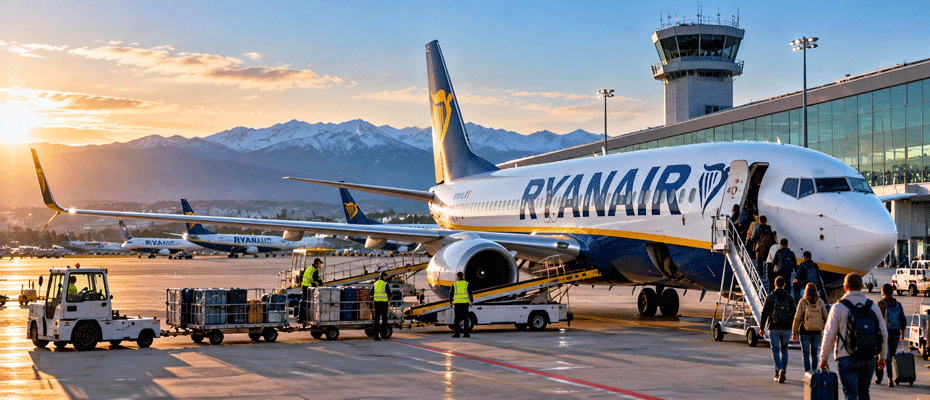
Ryanair adds fourth aircraft at Memmingen Airport for winter 2026
The airline plans 25 routes, including new services to Catania and Tirana, and expects passenger traffic to rise by 21% despite wider capacity reductions in Germany
 Read the News
Delta completes global Wi-Fi coverage with Asia-Pacific expansion
Free onboard internet access is now available to SkyMiles members across Delta’s international network, with full fleet connectivity planned for early 2027
 Read the News

Türkiye targets $70 billion in tourism revenue for 2027
The government plans to increase tourism development funding to $244.5 million as it seeks to strengthen the country's position among the world's leading tourism destinations
 Read the News
Lufthansa retires last Airbus A340-600 after 23 years of service
The final scheduled flight from Washington to Frankfurt marks the end of an era as the airline accelerates its largest long-haul fleet renewal programme
 Read the News
Spain welcomes 11.5 million international air passengers in September
International arrivals rose by 5.1% year on year, bringing the total for the first nine months of 2026 to 90.9 million, according to Turespaña
 Read the News
Yanolja targets Asia-Pacific growth with hotel technology and B2B distribution
At ITB Asia 2026 in Singapore, the South Korean travel technology group will showcase AI-powered hotel operations and expand its accommodation distribution partnerships
 Read the News
Tomorrowland brings two-day electronic music festival to Shanghai
The sold-out event at Hero Dome combined international DJs, large-scale stage technology and local cultural experiences
 Read the News
Lufthansa Group launches first consumer campaign under its umbrella brand
The “Greatness is a Group effort” campaign highlights the benefits of an integrated airline network while preserving the individual identities of its carriers
 Read the News
Tourism employment in Spain exceeds three million in September
Tourism-related employment rises by 4.7% year on year, with hospitality driving growth and the Valencian Community recording the strongest regional increase
 Read the News
United Airlines expands meal preordering to shorter flights
The airline extends its Economy food preordering service to 420 additional daily flights across North America and the Caribbean
 Read the News

Thailand targets high-value tourism with new wellness strategy for 2027
At ITB Asia in Singapore, the Tourism Authority of Thailand is promoting wellness, emerging destinations and new partnerships as it shifts its focus from visitor numbers to tourism value