Tourexpi

WTTC welcomes EU tourism strategy but calls for faster action on travel barriers
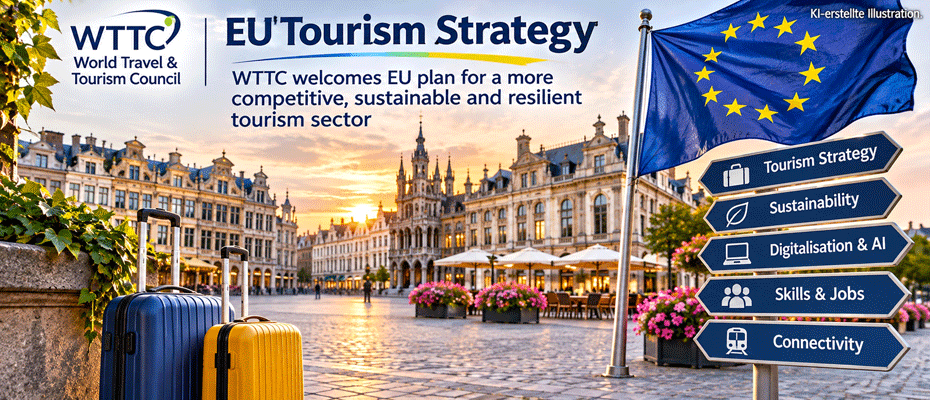
The World Travel & Tourism Council (WTTC) has welcomed the European Commission’s first EU Sustainable Tourism Strategy, describing it as an important step towards strengthening Europe's tourism competitiveness, sustainability and resilience. The organisation sees substantial alignment between the Commission's proposals and its eight global strategic priorities, but stresses that effective implementation will require closer cooperation between European institutions, national governments and the private sector.
The strategy comes at a time when tourism is expected to outperform the wider European economy. According to WTTC forecasts, Europe's travel and tourism sector will grow by 3.1% in 2026, compared with 1.1% for the broader economy. Against this background, the organisation considers the Commission's recognition of tourism as a strategic economic sector particularly significant for future investment, employment and regional development.
WTTC has also welcomed the work of Apostolos Tzitzikostas, European Commissioner for Sustainable Transport and Tourism, in advancing the initiative. While supporting the overall direction, the organisation argues that several important challenges remain unresolved, particularly those involving cross-border travel, transport connectivity and investment conditions. These areas will require coordinated action beyond the Commission's tourism portfolio if the strategy is to deliver measurable benefits for businesses and destinations.
Digital borders and easier travel procedures
One of WTTC's principal recommendations concerns the simplification of international travel to and within Europe. The organisation supports the strategy's recognition of visa facilitation, digital identity and more efficient border management, but is calling for faster implementation.
Its proposals include interoperable digital travel credentials, secure biometric technologies and more predictable visa procedures. WTTC also advocates wider availability of long-validity multiple-entry visas and a registered traveller programme for frequent international visitors.
Particular attention is directed towards the European Entry/Exit System (EES) and the European Travel Information and Authorisation System (ETIAS). WTTC stresses that both systems should operate efficiently during peak travel periods, with clear information provided to passengers.
The organisation additionally supports the introduction of One Stop Security arrangements, allowing eligible connecting passengers who have already undergone screening to equivalent European standards to avoid unnecessary repeat security checks.
For airlines, airports and international travel distributors, these measures could influence the efficiency and attractiveness of European travel, particularly for visitors arriving from long-haul markets.
Sustainable destination management and digital innovation
The Commission's proposed EU Model for Tourism Management and accompanying EU Toolbox are among the initiatives receiving WTTC's support. Both are intended to help destinations manage tourism development while considering environmental pressures, local communities and economic competitiveness.
WTTC emphasises that destination management policies should be proportionate and adapted to local conditions rather than applying identical solutions across Europe. Reliable data and evidence-based decision-making will be important in balancing visitor demand with the needs of residents and tourism businesses.
The organisation also welcomes the proposed EU Tourism Observatory and Common European Tourism Data Space. These initiatives could improve access to tourism information, support destination planning and create opportunities for innovation.
Artificial intelligence is another area identified as strategically important. WTTC supports the proposed integration of tourism into the EU Apply AI Strategy and sees opportunities for joint pilot projects, particularly those helping small and medium-sized enterprises adopt new technologies.
Resilience is also a central concern. The proposed EU Tourism Crisis Coordination Network could strengthen information sharing and cooperation between governments and tourism companies during disruptions, supporting more coordinated responses and destination recovery.
Investment, skills and transport connectivity
WTTC considers private investment essential to maintaining Europe's position in an increasingly competitive global tourism market. It is encouraging measures that simplify investment procedures, mobilise private capital and strengthen public-private partnerships.
The Commission's focus on small and medium-sized enterprises is particularly welcome. WTTC has highlighted potential links with its Together in Travel initiative, which aims to support one million tourism SMEs worldwide through access to knowledge, resources and business networks.
Workforce development represents another important element of the strategy. The proposed EU Tourism Academy, planned for 2027, could help address labour shortages and bring tourism education more closely into line with industry requirements.
WTTC also sees opportunities for cooperation with its Malta Youth Initiative, which focuses on attracting young people into tourism careers through partnerships involving governments, educational institutions and businesses.
Transport connectivity remains a further priority. The organisation supports the development of multimodal travel corridors combining air, rail, road and maritime transport. Improved connections could make less-established destinations more accessible and help distribute tourism's economic benefits across European regions.
Industry cooperation will determine implementation
The proposed establishment of a high-level EU Tourism Alliance is another element supported by WTTC. The organisation believes such a platform could improve dialogue between European institutions, Member States, destinations and private-sector representatives.
However, WTTC is seeking further clarity on the alliance's responsibilities, governance and relationship with existing organisations. It stresses that new structures should complement established institutions rather than duplicate their work.
Gloria Guevara, President and CEO of WTTC, welcomed the Commission's recognition of tourism's economic importance.
“The European Commission has taken an important step in recognising Travel & Tourism as a strategic pillar of Europe’s competitiveness, economic prosperity and employment.”
She also emphasised the need to move from policy commitments towards practical implementation, supported by cooperation between public authorities and the tourism industry.
For Europe's tourism businesses, the strategy could provide a broader policy framework covering issues ranging from digital booking and border procedures to investment, sustainability and workforce development. Its practical impact, however, will depend on the measures ultimately adopted and the extent to which EU institutions and Member States coordinate their implementation.
WTTC has indicated that it will continue contributing economic research, industry expertise and data to support the Commission and national governments as the strategy moves towards implementation.
Image Credit: AI generated illustration
The most interesting news


Princess Cruises launches Blue Friday sale with discounts of up to 50 percent
The cruise line is offering reduced fares, additional savings and selected free third- and fourth-guest fares for bookings made by December 7
Spain seeks leading role in EU Sustainable Tourism Strategy
Madrid backs European plans for better destination management and digitalisation while calling for stronger measures on housing, employment and tourism funding

Hyatt opens The Mindaro hotel near Portland International Airport
The 90-room lifestyle property forms part of a hospitality complex combining airport accommodation, restaurants and conference facilities

Emirates opens Dubai hospitality training centre to UAE businesses
The airline is making its $8 million training facility available to external organisations, offering courses in customer service, fine dining, gastronomy and leadership

Marella Discovery 2 introduces four new venues as ship goes adults-only
TUI’s UK cruise line is adding private karaoke, an immersive speakeasy, a 1920s escape room and a creative retreat ahead of the 2027 season

Delta expands summer 2027 flights to US and Caribbean leisure destinations
New seasonal weekend routes and additional frequencies will improve access to national parks, coastal resorts and holiday destinations across North America

Southeast Asian travelers discover new destinations in Japan, China and South Korea
Traveloka booking data reveals growing interest in Fukuoka, Jeju and lesser-known Chinese cities as travelers explore alternatives to established East Asian tourism hubs

Marriott enters Laos with Luxury Collection resort in Luang Prabang
The opening of La Résidence Phou Vao marks Marriott International’s 800th property in Asia Pacific excluding China, bringing a 36-suite hillside retreat into its luxury portfolio


Thailand expands Balkan tourism links with new Sofia–Phuket flights
A new direct service from Bulgaria and a Romanian travel trade initiative aim to increase visitor arrivals and promote multi-destination holidays along Thailand’s Andaman coast

Norwegian Cruise Line launches Black Friday sale with 50% discount
The promotion covers the entire fleet, including upcoming ships Norwegian Aura and Norwegian Bella, with additional benefits available on selected sailings

Spain’s tourism workforce exceeds 3.25 million as employment rises 5.4%
Tourism added more than 166,000 jobs in the third quarter of 2026, while permanent contracts and international employment continued to grow

Marella Cruises strengthens UK travel trade support with two appointments
TUI’s cruise brand introduces its first dedicated Key Account Manager and appoints a new Trade Training Manager to expand sales support and product training for travel agents

Agoda highlights five lesser-known winter destinations across Asia
From Japan’s snow-covered forests to frozen lakes in China and mountain landscapes in Kashmir, alternative winter escapes offer experiences beyond established ski resorts


Condor expands Bangkok services with daily flights via Abu Dhabi
New codeshare connection with Etihad Airways gives travellers two daily options from Frankfurt to Bangkok and expands access to destinations across Asia, Africa and Australia

Hilton introduces wellness-focused meetings and events concept
New High Performance Meetings framework integrates nutrition, movement, mental wellbeing and recovery into business events to improve attendee engagement

Climate change threatens snow reliability at Europe's ski resorts
WMO warns that 53% of European ski resorts could face very high snow availability risks under 2°C warming, raising concerns for winter tourism and mountain economies

G Adventures identifies eight emerging travel destinations for 2027
The small-group tour operator highlights rising demand for Central Asia, China and the Balkans, alongside new itineraries designed to bring travellers closer to local communities

IHG plans Holiday Inn Resort near India's Gir National Park
The 92-room property in Gujarat is scheduled to open in early 2031, expanding branded accommodation in one of India's most distinctive wildlife tourism destinations
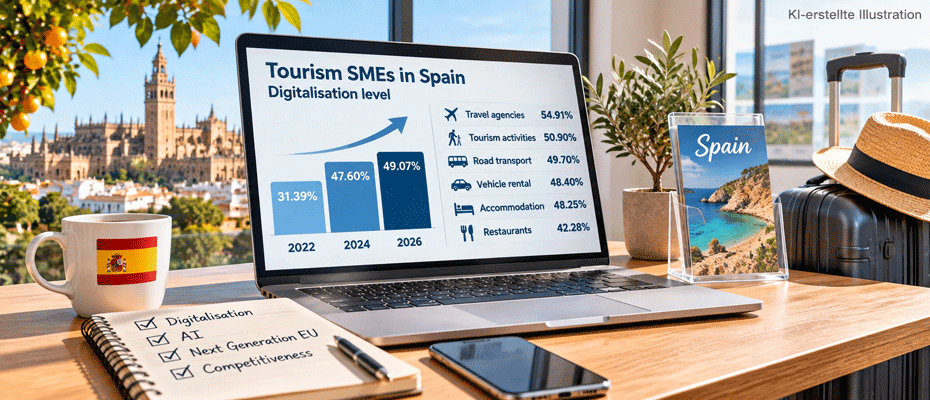
Spain’s tourism SMEs reach 49% digital maturity as AI adoption grows
A new study of more than 2,700 tourism businesses reveals significant progress since 2022, with travel agencies leading digital transformation while microenterprises continue to face substantial barriers

SWISS to introduce Airbus A350 on Zurich–Mumbai route in December
The airline will deploy its new long-haul aircraft on flights to India from 15 December 2026, bringing the SWISS Senses cabin experience to Mumbai for the first time

Thailand promotes wellness tourism with 47 industry partners at WTM London
Tourism Authority of Thailand highlights cultural experiences, sustainable travel and new business opportunities as UK demand continues to grow