Tourexpi

Chinese outbound travel grows as longer, multi-destination trips gain ground

Chinese outbound travel continued its recovery during Golden Week 2026, with 4.44 million departures from mainland China between October 1 and 7, representing a year-on-year increase of 9.3 percent. According to a new report by marketing technology company EternityX, the holiday period also revealed substantial changes in travel behaviour. Chinese tourists are increasingly choosing longer journeys, combining several destinations and spending more time on cultural and local experiences rather than traditional sightseeing and shopping.
The extended holiday calendar contributed to this development. By combining three days of annual leave with the Mid-Autumn Festival and National Day holidays, travellers could create a 13-day travel window between September 25 and October 7. The proportion of outbound package travellers booking journeys lasting at least eight days reached approximately 42 percent, compared with around 29 percent in 2024.
For international destinations, airlines and tourism businesses, the findings point to opportunities beyond the continued recovery in visitor numbers. Multi-destination bookings increased by 84 percent, substantially exceeding the overall growth in outbound departures. At the same time, Chinese travellers demonstrated greater interest in long-haul destinations, personalised itineraries and digital planning tools. The report combines official immigration statistics with booking data, consumer surveys and information from major Chinese travel platforms.
Longer journeys create opportunities for international destinations
The growth in complex travel itineraries was particularly pronounced during the holiday period. Travellers booking multi-country journeys visited an average of 2.8 countries, while advance bookings on long-haul routes exceeding 8,000 kilometres increased by 30 percent. Overall outbound flight bookings, by comparison, grew by approximately four percent.
These developments suggest that Chinese travellers are increasingly willing to use extended holidays for more ambitious international journeys. Instead of concentrating on a single destination, they are combining several countries or regions within one itinerary.
The changing booking patterns could benefit destinations offering complementary experiences and convenient transport connections. Regional tourism organisations and travel operators may find opportunities to develop itineraries combining cultural attractions, outdoor activities and local experiences across several destinations.
Hong Kong and Macao also recorded strong visitor numbers. Hong Kong welcomed approximately 1.41 million mainland visitors during Golden Week, an increase of 9.4 percent, while hotel occupancy approached 90 percent.
Macao received around 972,000 mainland visitors, with average daily arrivals increasing by 19.6 percent compared with the previous year. Hotel occupancy reached 91.3 percent.
South Korea and Southeast Asia benefit from changing demand
Travel demand shifted considerably between destinations during 2026.
South Korea emerged as the leading planned destination in the surveys cited by EternityX, accounting for 20.1 percent of respondents. Flight bookings to Seoul increased by 91 percent.
Southeast Asian destinations also performed strongly. Bangkok, Kuala Lumpur, Singapore and Bali appeared among the most frequently booked destinations across several travel platforms.
Island destinations recorded particularly strong growth, with bookings for Cebu increasing by 111 percent and Phuket by 78 percent.
Japan, meanwhile, lost ground in the booking rankings. According to the report, the country disappeared from most leading platform top-ten lists after occupying first place in 2025.
Long-haul demand also benefited destinations offering visa-free access or distinctive cultural experiences.
Hotel bookings in Nevşehir, the gateway to Türkiye's Cappadocia region, increased fivefold. Ireland, Greece, Portugal, Nepal and Finland recorded a doubling of hotel bookings on the platforms examined.
For European tourism businesses, these developments indicate opportunities to attract Chinese visitors beyond established metropolitan destinations and traditional shopping itineraries.
Cultural experiences replace conventional sightseeing
The report identifies a growing preference for slower and more immersive travel.
In the consumer research cited by EternityX, 47.3 percent of respondents identified in-depth, slower-paced journeys as their preferred travel style.
Searches for cultural heritage, traditional crafts and outdoor activities on the Chinese social platform Xiaohongshu increased by 48 percent, significantly faster than searches associated with conventional sightseeing and popular photo locations.
Booking patterns reflected similar changes.
On the first day of Golden Week, reservations for local experiences abroad increased by 37 percent, while airport transfer bookings rose by 43 percent.
Traditional shopping expenditure showed a different development. At Lotte Duty Free in South Korea, spending per Chinese customer declined by 19 percent between January and August 2026, even though customer numbers increased by 74 percent.
The figures suggest that higher visitor volumes do not necessarily translate into equivalent growth in retail spending. Instead, a greater proportion of travel expenditure may be directed towards activities, transport and destination experiences.
Artificial intelligence changes travel planning
Digital technology is becoming increasingly influential throughout the Chinese travel booking process.
According to the consumer surveys referenced in the report, 61.8 percent of Chinese travellers now use artificial intelligence to help plan itineraries. Another 20.3 percent indicated that they would be willing to complete travel bookings through AI-based services.
One major online travel platform reported a 110 percent month-on-month increase in flight and hotel bookings supported by its AI assistant during Golden Week.
Social media continues to play an important role in destination discovery. Xiaohongshu, which reported more than 230 million users interested in travel, has become a significant source of travel inspiration and practical information.
The emerging booking process increasingly combines social media recommendations, AI-generated itineraries and transactions through online travel agencies or integrated digital services.
Payment platforms are also expanding their role beyond financial transactions.
WeChat Pay reported substantial growth in cross-border transactions through mini-programs between September 25 and October 5. Duty-free transactions increased 8.5-fold, ferry ticket purchases more than tripled, and ride-hailing transactions grew by more than 60 percent.
European destinations featured prominently in the payment data, accounting for 12 of the 20 countries recording the strongest transaction growth.
Chinese outbound travel could reach a new record in 2026
China recorded approximately 167.9 million outbound visits in 2025, representing growth of 15.1 percent compared with the previous year.
EternityX expects a further increase of approximately nine to ten percent in 2026. Based on this projection, outbound travel could reach between 183 million and 184 million visits, exceeding the pre-pandemic peak of approximately 169 million recorded in 2019.
These figures remain forecasts rather than confirmed annual results.
The company also expects the changing structure of demand to influence destination marketing ahead of the 2027 travel season.
Charlene Ree, founder and CEO of EternityX, argues that tourism brands should place greater emphasis on longer itineraries and measurable booking results rather than concentrating exclusively on visitor numbers or advertising reach.
For destinations seeking Chinese visitors, the report recommends beginning promotional activities six to eight weeks before major holiday periods and developing products that combine multiple locations with distinctive local experiences.
The findings also highlight the growing importance of making tourism products accessible through Chinese social platforms, AI-assisted travel planning and familiar digital payment systems.
With Golden Week 2027 expected to provide a shorter holiday window, travel patterns may change again. Nevertheless, the 2026 results indicate that international destinations are increasingly competing not only for Chinese visitor numbers but also for longer stays, more extensive itineraries and a larger share of expenditure on experiences.
Image Credit: © AI generated illustration
The most interesting news
 Read the News

WTTC aims to support one million tourism SMEs worldwide
New research suggests that improving productivity among smaller tourism businesses could generate an additional US$63 billion in direct tourism GDP across eight major economies
 Read the News
European travel and tourism growth to reach 3.1% in 2026
WTTC forecasts stronger growth than the wider economy as more than 1,000 industry leaders gather in Malta for the organisation’s Global Summit
 Read the News
Atlas Ocean Voyages expands Antarctica programme for 2028/29
The cruise line introduces 25 polar expeditions, more fly-and-sail departures and extended itineraries reaching South Georgia, the Falkland Islands and the Antarctic Circle
 Read the News

Lufthansa named Best European Airline at Asian travel awards
Travel industry professionals across Asia recognise Lufthansa as the airline prepares to introduce its new Allegris cabins on flights to Singapore and Kuala Lumpur
 Read the News
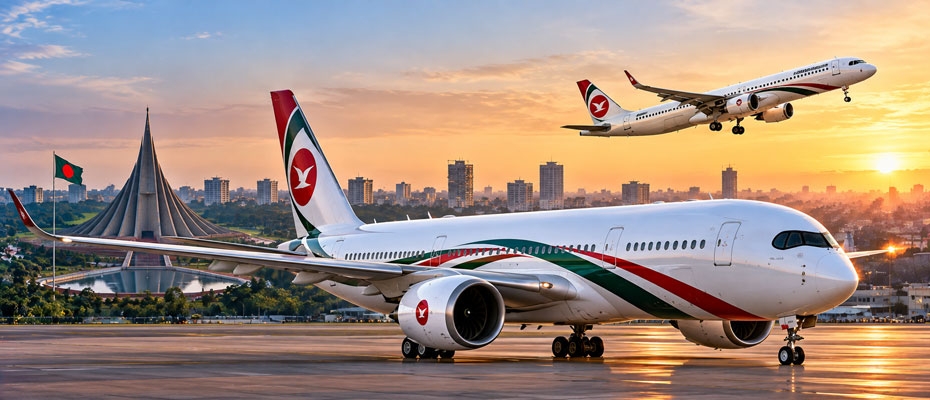
Biman Bangladesh Airlines orders 10 Airbus aircraft for fleet expansion
The national carrier plans to introduce A350-900 and A321neo aircraft from 2033, strengthening long-haul and regional operations alongside major Boeing orders
 Read the News
Ryanair to suspend all Bremen flights from April 2027
The airline plans to withdraw 500,000 annual seats from the German airport, citing high operating costs and aviation taxes as it shifts capacity to other European markets
 Read the News

LOT Polish Airlines launches direct Warsaw–Bangkok flights
The new connection strengthens Thailand’s access to Central European markets, with five weekly flights planned for winter and Polish arrivals expected to reach 250,000 in 2026
 Read the News
Six Mexican beaches rank among the Americas’ best in 2026
Tulum takes second place in the Condé Nast Traveller Readers’ Choice Awards, while destinations in Baja California Sur, Jalisco and Nayarit also receive recognition
 Read the News
Da Nang strengthens MICE appeal with new Marriott event facilities
Courtyard by Marriott Danang Han River offers 13 meeting venues, a rooftop event space and 296 rooms as the Vietnamese city targets nearly 93,000 business event visitors in 2026
 Read the News
Delta expands free Wi-Fi to trans-Pacific flights in October
The airline has secured regulatory approval to extend Delta Sync connectivity across its Pacific network, completing the final major stage of its global Wi-Fi rollout
 Read the News
Thailand plans tourism experiences for transit passengers
New partnership between tourism and aviation organisations aims to turn longer flight connections into short visits to local attractions, restaurants and communities
 Read the News
IHG opens InterContinental Taipei with 347 rooms and seven restaurants
Located within the Taipei Dome complex, the new luxury hotel strengthens IHG’s presence in Taiwan and expands its partnership with Farglory Group
 Read the News
TransNusa increases Jakarta–Singapore flights to four daily
Indonesian carrier expands capacity on the busy regional route, offering additional evening connections for business and leisure travellers
 Read the News
Marriott identifies local cuisine as Asia Pacific’s leading dining trend
New Future of Food 2027 report highlights growing demand for regional flavours, informal dining spaces and shorter fine-dining experiences
 Read the News
WTTC identifies eight priorities to strengthen European tourism
New research forecasts Europe’s travel and tourism economy will reach US$3.8 trillion by 2036, but warns that investment, connectivity and workforce shortages require urgent policy attention
 Read the News
Delta postpones Atlanta–Riyadh flights until March 2027
The US airline delays its planned nonstop service to Saudi Arabia amid regional developments, offering affected passengers flexible rebooking and refund options
 Read the News
Holland America Line celebrates Pan Am’s centenary with special Caribbean cruise
A 28-day voyage aboard Zuiderdam will retrace historic aviation routes through the Caribbean and Central America, combining aviation history with themed dining and exclusive shore excursions
 Read the News
WTTC honours Türkiye’s Tourism Minister Mehmet Nuri Ersoy
The Global Champion Award recognises public-private cooperation and tourism development as Türkiye’s travel economy is forecast to grow further in 2026
 Read the News
Thailand launches nationwide travel sales campaign in Spain
Tourism Authority of Thailand partners with Viajes El Corte Inglés to promote winter holidays, targeting 20 million consumer impressions and 3,000 package bookings
 Read the News
Marriott Bonvoy brings 14 Hong Kong hotels to Wine & Dine Festival
The four-day culinary event will feature leading chefs, mixologists and new tasting experiences celebrating Hong Kong’s diverse food culture
 Read the News
EXPO 2027 Belgrade strengthens tourism cooperation with North Macedonia
Business networking in Skopje highlights joint travel opportunities as Serbia prepares to welcome an estimated four million visits during the international exhibition