Tourexpi

Germany: When tourism becomes a question of identity
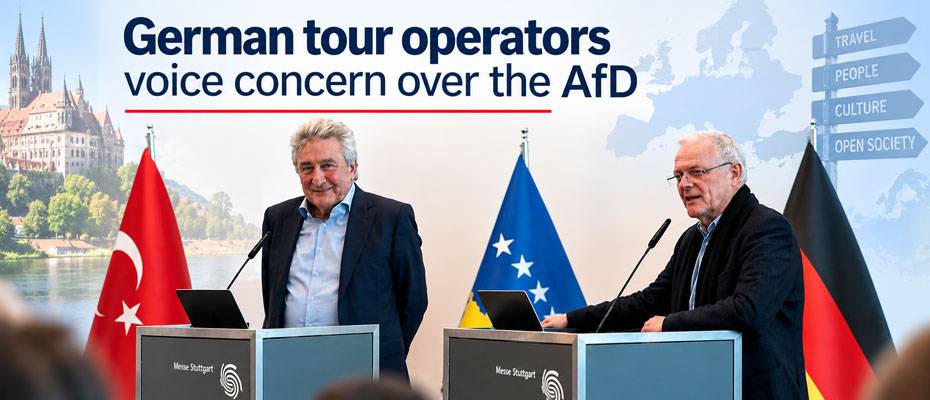
There are moments when taking a position becomes
necessary. With Saxony-Anhalt electing a new state parliament on 6 September,
Günter Ihlau and Dr Wolfgang Isenberg examine an area of politics that rarely
attracts the same attention as migration, education or public broadcasting:
tourism.
Their essay, “Das Land, das wir den Gästen zeigen” –
“The country we show our guests” – takes statements by AfD politicians on
tourism, history and national identity as its starting point. Hans-Thomas
Tillschneider, the AfD parliamentary group’s spokesman for education, culture
and science in Saxony-Anhalt, has called for the state to develop what he
describes as “Volksbildungstourismus” – tourism serving popular education –
under the banner #deutschdenken. Saxony-Anhalt, he argues, should become a “place
of longing for all German patriots”.
For Ihlau and Isenberg, this raises a question
extending far beyond destination marketing: who decides which stories a country
tells about itself, what constitutes a sense of home and belonging, and what
conclusions visitors are expected to draw from history?
When travel becomes identity politics
For a long time, the AfD’s tourism policy appeared
relatively conventional. When Sebastian Münzenmaier became chairman of the
German Bundestag’s Tourism Committee in 2018, the appointment was
controversial, but much of the subsequent parliamentary work concerned familiar
industry issues such as SMEs, infrastructure, competitiveness, digitalisation
and bureaucracy.
According to the authors, a shift became more apparent
later. In 2023, AfD tourism politicians at federal and state level argued that
strong domestic tourism should not only support regional economic value
creation but also “create identity”.
Saxony-Anhalt provides a particularly clear example.
Under the #deutschdenken concept, tourism is linked to German history, national
identity, language and culture. Tillschneider has described existing cultural
tourism as “nationally and historically sterile” and advocated giving greater
prominence to historical sites according to their importance for German
identity.
Ihlau and Isenberg do not object to presenting German
history. Their criticism begins where historical events and places are
deliberately selected and connected in order to support a predetermined concept
of national identity.
History should leave room for judgement
The proposed “Straße des Deutschen Reiches”, or “Road
of the German Reich”, illustrates the distinction. The authors stress that a
historical tourist route is not problematic in itself. Themed routes are a
well-established tourism instrument, linking destinations and bringing visitors
to smaller towns and rural areas.
The decisive issue, they argue, is the narrative
connecting those places. According to Tillschneider, the route would link
locations where German identity was shaped and would explicitly form part of
the #deutschdenken concept.
The Bauhaus provides a contrasting example. Founded in
Germany, it became a global cultural phenomenon without losing its German
origins. Its ideas crossed borders, and its international significance is today
an important part of Dessau’s appeal as a destination.
The authors cite Reinhard Meyer, President of the
German Tourism Association, who sees eastern Germany’s tourism strength
precisely in internationally recognised cultural attractions such as the
Bauhaus, the Luther sites and UNESCO World Heritage properties.
Tourism itself reflects an international society
The debate also has an immediate economic dimension.
Tourism depends on international visitors, but increasingly also on an
international workforce.
According to figures cited by Ihlau and Isenberg,
foreign nationals now account for 44.5 percent of employees subject to social
security contributions in Germany’s hospitality sector. In food and beverage
services the share reaches 47.8 percent, rising to 54.6 percent in food-led
restaurants.
For the authors, these figures describe everyday
reality rather than an abstract integration debate. People from different
countries work in hotel kitchens, at reception desks and in restaurants, serve
regional dishes and German wines and explain destinations to visitors.
Their argument is that belonging therefore cannot be
understood solely in terms of origin. It also develops through people living,
working and sharing experiences together.
Climate, landscapes and the danger of simple answers
The essay also examines the relationship between
tourism, climate policy and landscape protection. Wind turbines alter
landscapes, the authors acknowledge, but this does not automatically mean that
renewable energy destroys landscapes or damages tourism.
Landscapes have always changed. Vineyards themselves
are cultural landscapes, while reservoirs, roads, cable cars and tourism
infrastructure have all transformed places that are subsequently marketed as
landscapes worth protecting.
The political challenge, according to Ihlau and
Isenberg, is therefore to balance competing interests: how much change can a
landscape absorb, what should be preserved and who should bear the costs? They
make a similar argument about climate policy, acknowledging that travel must
remain affordable and that bureaucracy or poorly designed sustainability
requirements can impose burdens on tourism businesses.
Their criticism is directed at reducing such complex
conflicts to binary choices – landscape versus wind energy, climate protection
versus freedom to travel, tradition versus “wokeness”, or the familiar versus
the foreign.
Tourism thrives on different perspectives
At the heart of the essay is a broader argument about
democracy. A resident sees a destination differently from a visitor, a hotelier
differently from a conservationist and a hiker differently from an energy
planner. Several perspectives can be legitimate at the same time without any
single one representing the whole picture.
For Ihlau and Isenberg, democratic politics must
ultimately make decisions, but those decisions are not improved by eliminating
disagreement beforehand. They require competing interests to be recognised,
consequences considered and choices explained.
The same principle applies to history. Governments can
support museums, develop destinations, establish priorities and promote
historical education. But, the authors argue, they should not determine in
advance what political conclusion visitors are expected to reach from their
encounter with history.
What kind of country do we want to be?
No single tourist route, wind turbine or debate about
the Bauhaus determines the future of democracy. Taken together, however, Ihlau
and Isenberg see these disputes as evidence of fundamentally different ideas
about how society should deal with history, identity, diversity and change.
Their criticism is not directed against a sense of
home, German history or the desire to shape social change. It is directed
against what they regard as an attempt to create an increasingly unambiguous
political order in which belonging is more narrowly defined and history is
organised around a desired identity.
For the authors, tourism is therefore anything but a
sideshow in this debate. Travel depends on encounters with what is unfamiliar,
on different perspectives and on experiences whose outcome is not
predetermined.
Their conclusion is correspondingly clear: a
government may build roads, support museums, develop destinations, install
signs and finance tourism campaigns. But it should not seek to determine what
people are supposed to think at the end of their journey.
The authors
Günter Ihlau is a board member of the Center for
Innovation & Sustainability in Tourism (c.i.s.t) and Chairman of the
Cultural Tourism Working Group at the German Travel Association (DRV). He
previously served, among other positions, as Director of International
Relations at TUI AG and coordinator of TUI AG’s Leisure and Tourism think tank,
and spent more than 15 years working in tourism destinations.
Dr Wolfgang Isenberg is Chairman of the Political
Advisory Board for Tourism in North Rhine-Westphalia. His previous roles
include Director of the Thomas Morus Academy, lecturer and coordinator of TUI
AG’s Leisure and Tourism think tank.
Image Credit: © AI generated illustration with material courtesy of
Tourexpi
The most interesting news
 Read the News

Princess Cruises expands Sanctuary Collection to five more ships
The cruise line is extending its premium accommodation concept across the Royal Class fleet, with the first new departures available from January 2027
 Read the News
IHG and American Express Expand Premium Travel Benefits in China
A new partnership offers eligible Platinum Cardmembers elite hotel status, additional loyalty rewards and cashback incentives across selected properties
 Read the News
Lufthansa Group announces largest route expansion since 2020
Ten new long-haul connections, additional flights to the Americas and Asia, and expanded leisure services will shape the group's summer 2027 schedule
 Read the News
ROBINSON targets Vietnamese and South Korean travellers with tailored campaigns
TUI Group’s premium club resort brand is promoting ROBINSON NAM HOI AN through two distinct marketing strategies, with influencer partnerships and locally adapted digital content
 Read the News
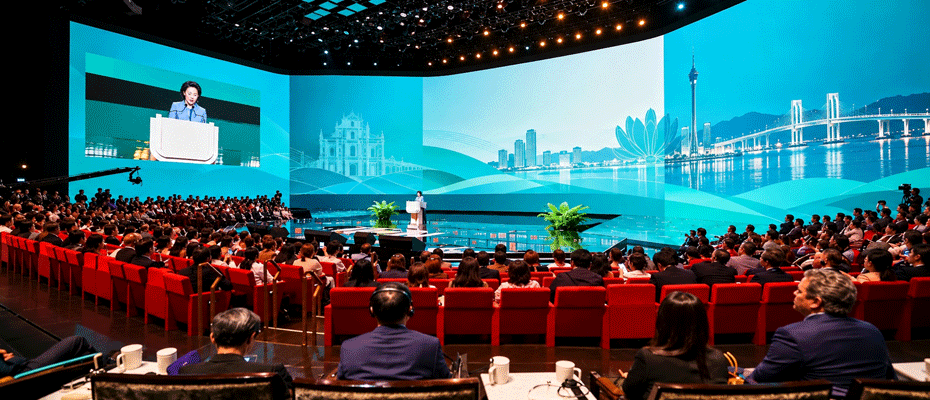
Global Tourism Economy Forum in Macao strengthens international tourism cooperation
The 2026 edition brought together around 1,300 participants and generated more than 1,000 business matchmaking contacts, with Hainan set to host the next forum in 2027
 Read the News
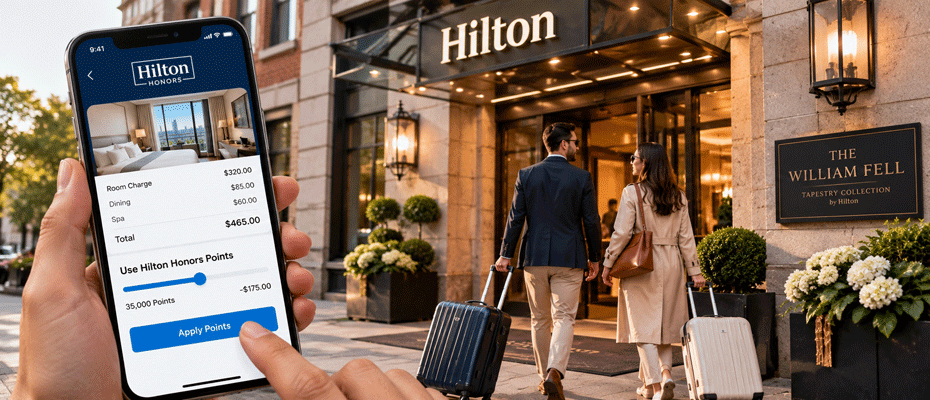
Hilton introduces digital Pay with Points for hotel expenses
The new Hilton Honors feature allows elite members to redeem loyalty points against eligible hotel charges during mobile checkout, with a wider rollout planned for 2027
 Read the News
Holland America Line marks 80 years in Alaska with new heritage tour collection
More than 35 excursions celebrating Alaska’s railways, glaciers, wildlife and cultural history will be available on selected cruises and land-and-sea journeys in 2027
 Read the News
Aruba Fashion Week Marks Its 10th Anniversary with Iberostar Partnership
The November 2026 event will bring international designers, Caribbean creativity and luxury hospitality together across two venues in Aruba
 Read the News
Shanghai’s St. Regis on the Bund Earns Michelin Key on Second Anniversary
The luxury hotel celebrates two years with international recognition, new suites and an expanded focus on gastronomy and cultural experiences
 Read the News
Kempinski and BTG Hotels plan to deepen luxury hospitality partnership in China
The two hotel groups aim to expand their cooperation through new luxury hotel projects, additional investment in operational resources and opportunities in international markets
 Read the News

Ryanair adds fourth aircraft at Memmingen Airport for winter 2026
The airline plans 25 routes, including new services to Catania and Tirana, and expects passenger traffic to rise by 21% despite wider capacity reductions in Germany
 Read the News
Delta completes global Wi-Fi coverage with Asia-Pacific expansion
Free onboard internet access is now available to SkyMiles members across Delta’s international network, with full fleet connectivity planned for early 2027
 Read the News

Türkiye targets $70 billion in tourism revenue for 2027
The government plans to increase tourism development funding to $244.5 million as it seeks to strengthen the country's position among the world's leading tourism destinations
 Read the News
Lufthansa retires last Airbus A340-600 after 23 years of service
The final scheduled flight from Washington to Frankfurt marks the end of an era as the airline accelerates its largest long-haul fleet renewal programme
 Read the News
Spain welcomes 11.5 million international air passengers in September
International arrivals rose by 5.1% year on year, bringing the total for the first nine months of 2026 to 90.9 million, according to Turespaña
 Read the News
Yanolja targets Asia-Pacific growth with hotel technology and B2B distribution
At ITB Asia 2026 in Singapore, the South Korean travel technology group will showcase AI-powered hotel operations and expand its accommodation distribution partnerships
 Read the News
Tomorrowland brings two-day electronic music festival to Shanghai
The sold-out event at Hero Dome combined international DJs, large-scale stage technology and local cultural experiences
 Read the News
Lufthansa Group launches first consumer campaign under its umbrella brand
The “Greatness is a Group effort” campaign highlights the benefits of an integrated airline network while preserving the individual identities of its carriers
 Read the News
Tourism employment in Spain exceeds three million in September
Tourism-related employment rises by 4.7% year on year, with hospitality driving growth and the Valencian Community recording the strongest regional increase
 Read the News
United Airlines expands meal preordering to shorter flights
The airline extends its Economy food preordering service to 420 additional daily flights across North America and the Caribbean
 Read the News

Thailand targets high-value tourism with new wellness strategy for 2027
At ITB Asia in Singapore, the Tourism Authority of Thailand is promoting wellness, emerging destinations and new partnerships as it shifts its focus from visitor numbers to tourism value